BA (Hons) in
International Relations and Law
This unique interdisciplinary programme is designed to prepare graduates who can navigate the complex relationship between law, policy, and international affairs, equipping them to become globally competent professionals capable of shaping Uzbekistan’s engagement with the world.
School of Law, Technology and Education
COURSE OVERVIEW
The BA (Hons) in International Relations and Law at Westminster International University in Tashkent (WIUT) offers a comprehensive and practice-oriented education that combines legal knowledge with an in-depth understanding of international politics, diplomacy, and global governance. This unique interdisciplinary programme is designed to prepare graduates who can navigate the complex relationship between law, policy, and international affairs, equipping them to become globally competent professionals capable of shaping Uzbekistan’s engagement with the world.
The curriculum integrates core elements of public international law, political science, diplomacy, human rights, and international organisations, allowing students to develop a solid foundation in both legal reasoning and international relations theory. By bridging two complementary disciplines, the programme reflects WIUT’s mission to deliver education that is both globally competitive and locally relevant, responding directly to Uzbekistan’s priorities under the Uzbekistan-2030 Strategy for international cooperation, legal reform, and sustainable governance (stat.uz).
WHAT YOU NEED TO KNOW
Award Title
Bachelor of Arts (Hons)
Start Date
September (each academic year)
Duration
3 years (full time)
Tuition Fees
Domestic - 38,820,000 UZS /per year
International - 54,600,000 UZS /per year
HOW YOU WILL STUDY
Your learning experience combines a variety of teaching and learning methods designed to develop both theoretical knowledge and practical skills in law and international relations. You will engage in seminars, case studies, simulations of diplomatic negotiations, policy analysis workshops, and independent research activities, allowing you to connect theory with real-world practice.
Lectures and guided learning introduce key concepts in law, international relations, diplomacy, and global governance, helping you build a strong foundation for further study and independent analysis.
Seminars and workshops provide interactive environments where you explore legal and political issues, participate in discussions, and develop skills in negotiation, advocacy, and public communication.
- Year 1 (Level 4): You will develop foundational knowledge of law and international relations as a scholarly discipline, informed by key theories and political concepts, and gain an understanding of how political culture and power shape legal and political systems.
- Year 2 (Level 5): You will engage with contemporary issues in global security, public international law, and foreign policy, while developing the ability to critically assess competing perspectives and analyse the relationships between law, politics, and international institutions.
- Final Year (Level 6): You will examine complex issues in international economic, environmental, and border policies, engage with advanced debates on law and international politics, and complete independent work demonstrating in-depth research and critical analysis.
Throughout the programme, you will develop key skills in legal and political research, analytical writing, problem-solving, and effective communication, supported by courses such as Research Methods in Law and Social Sciences and Applied Data for Global Policy.
In your final year, the Capstone Project enables you to apply your knowledge to an independent research study on global issues such as international law, conflict resolution, human rights, trade diplomacy, or environmental policy.
You will also benefit from opportunities to gain practical experience through internships and collaboration with ministries, embassies, and international organisations, enhancing your professional readiness and employability.
COURSE STRUCTURE
Please note: Not all option modules will necessarily be offered in any one year. In addition, timetabling and limited spaces may mean you cannot do your first choice of modules.
WHY CHOOSE BA (HONS) IN INTERNATIONAL RELATIONS AND LAW AT WIUT?
The BA (Hons) in International Relations and Law course is designed to provide students with a University education in law, which will:
Enable acquisition of knowledge and understanding of law and international relations and their appropriate application.
Develop personal competencies required for legal practice and other professional activities.
Encourage an enquiring, logical and critical approach to legal analysis, and an enthusiasm for learning.
Develop research skills and implement research strategy during programme and legal practice.
Promote practical skills of processing information, identifying, formulating and solving problems.
Enable strong awareness of contemporary legal tendencies in the development of international relations.
Develop an attitude of self-reflection and engagement in independent learning.
INDUSTRY CONNECTIONS
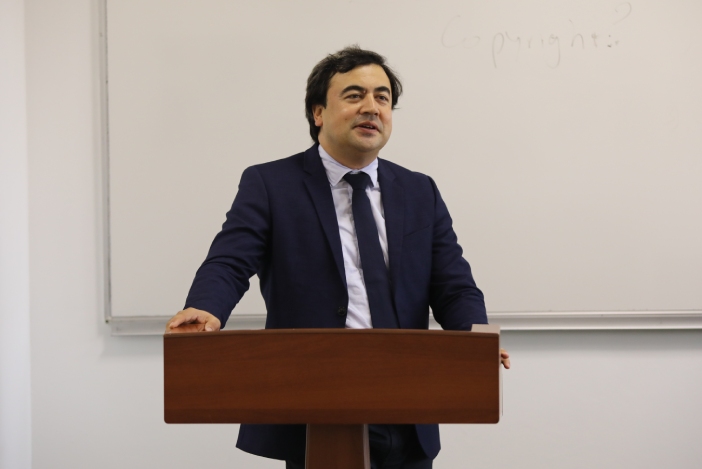
The BA (Hons) in International Relations and Law will incorporate practical and experiential components that provide students with exposure to real-world legal and diplomatic environments. This would help them connect theoretical knowledge with practice and improve their professional readiness. The group also recommended closer collaboration with institutions and organisations offering internship or exchange opportunities. Several experts proposed introducing or strengthening modules related to energy law, international transportation law, and investment arbitration, as these areas are expected to be in high demand over the next four to five years due to Uzbekistan’s active engagement in infrastructure, trade, and energy projects. In addition, participants encouraged the integration of alternative dispute resolution (ADR) training into the curriculum to address the growing need for mediators and arbitrators.
ASSESSMENT METHODS
Learning Outcomes are statements on what successful students have achieved as the result of learning. These are threshold statements of achievement the Learning Outcomes broadly fall into four categories:
The overall knowledge and understanding you will gain from your course (KU).
Graduate attributes are characteristics that you will have developed during the duration of your course (GA).
Professional and personal practice learning outcomes are specific skills that you will be expected to have gained on successful completion of the course (PPP).
Key transferable skills that you will be expected to have gained on successful completion of the course. These may include cognitive abilities such as problem solving, critical thinking, research and enquiry, analysis and evaluation, synthesis and creativity, and people (soft) skills such as leadership skills, team-working/collaboration, presentation skills, etc (KTS).
ENTRY REQUIREMENTS
We are committed to delivering a professional, fair, and transparent admissions process that ensures equal opportunity for all applicants. Our aim is to connect students with courses that align with their goals and their ability to meet academic and professional standards. Find out more Admissions policy and Terms and conditions.
-
Applicants should satisfy at a minimum one of the following requirements:
- Successful completion of an appropriate International Foundation course; or
- Successful completion of the first year of an appropriate degree course in a recognised Uzbek or similar university; or
- Two GCE A level passes (in any subject excluding mother tongue), plus three GCSE passes at grade C or above including English Language; or NC/ND or HNC/HND. (The range of academic disciplines studied is not hereby restricted, but certain vocational courses such as City and Guilds would not satisfy the admissions requirements.); or
- An Advanced General National Vocational Qualification (GNVQ); or
- Any other equivalent qualification normally accepted as entry requirements (e.g. International Baccalaureate, etc.).
-
Applicants must have:
- Completed their secondary education in English and achieved Grade C or above in the equivalent GCSE English exam; or
- IELTS score of 6.5 with a minimum of 6.0 in the writing component; or
- Successfully completed an appropriate International Foundation course with at least 45% in an Academic English module.
We accept the TOEFL (IBT, in-person test) for entry to our programmes. We also accept TOEFL ‘My Best Scores’ where it relates to TOEFL iBT test results.
Please note that the TOEFL Home Edition (Online test) is not accepted for entry to WIUT degree programmes.
- TOEFL should be 88 overall with a minimum of 21 in Writing.
-
Age requirements
Applicants will have to be 18 years of age at the start of the academic year. For the purposes of this regulation the academic year runs from 1st October to 30th September.
CAREERS
The BA in International Relations and Law is designed for ambitious students who want to:
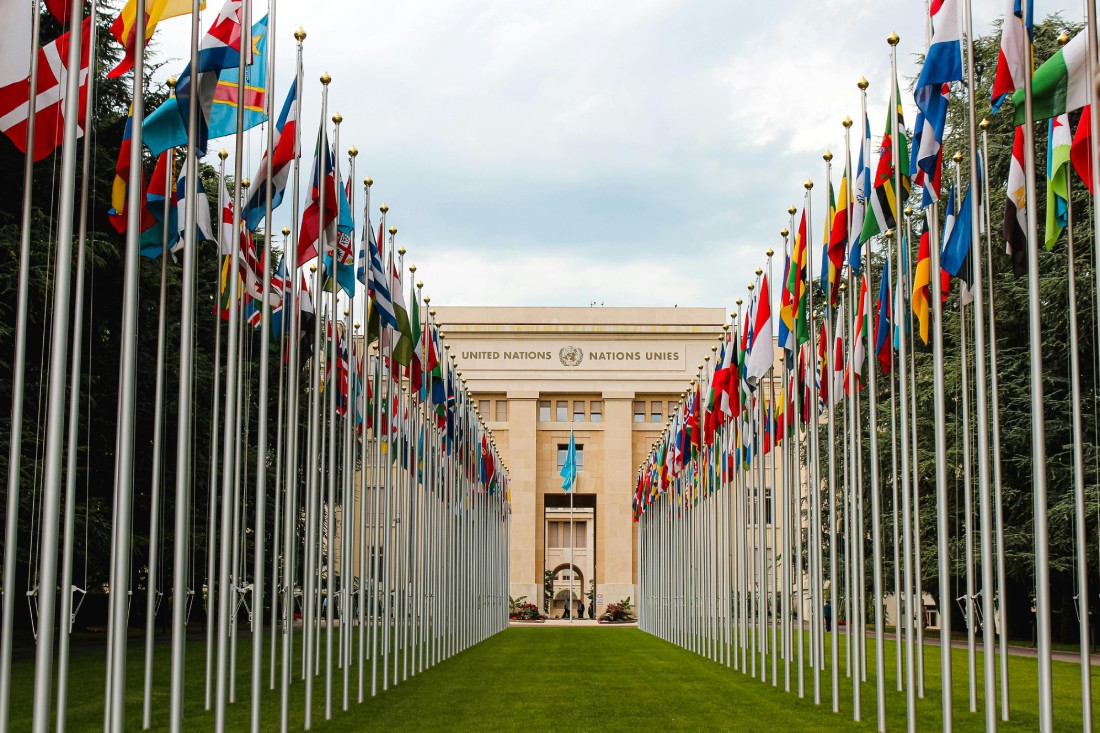
Enter diplomacy, the foreign service, or international organisations (UN, WTO, OSCE, UNDP)
Work in international law, arbitration, or dispute resolution, negotiations
Build careers in government ministries, investment agencies, or policy institutions
Join think tanks, NGOs, or international development organisations
Continue to postgraduate study in law, international relations, or public policy.

COURSE LEADER
Dr. Zakirov Bekzod received his LLM from Nagoya University and Ph.D in International public policy from the University of Tokyo in 2022. He is a director of the Center for Policy Research and Outreach (CPRO) and senior lecturer in Commercial Law at Westminster International University in Tashkent. His research focuses on global finance, political economy and economic policymaking in Central Asia, Russia and China. Dr. Zakirov has contributed to multiple policy-oriented initiatives, including projects supported by FAO, UKRI, OECD, CAREC Institute and Erasmus+ programs. He is a member of the research council of the Central Bank of Uzbekistan.
GLOBAL SKILLS AND COMPETENCIES
Analytical thinking and evidence-based reasoning are at the core of the programme. Students are trained to conduct legal and political research, analyse policy documents, and interpret statistical or qualitative data relevant to international relations. Courses such as Research Methods in Law and Social Sciences and Applied Data for Global Policy build students’ ability to use digital tools and databases to support legal and diplomatic analysis.
This focus on data literacy and digital skills ensures graduates are equipped for the modern international environment, where decision-making increasingly relies on accurate information, global trends, and technological tools.
TAKE THE NEXT STEP
Are you considering Westminster International University in Tashkent but unsure where to begin?
Our admissions counsellors are available to assist you. Have all your queries addressed to make an informed decision about your future.
RELATED PROGRAMMES

LLM in
International Commercial Law
Study international and regional law in English. Prepare for global legal careers.

MSc in
Applied Economics
Gain knowledge of economic theory and practice. Build skills for policy and consultancy.

MBA and
its Pathways
Study MBA programmes for professionals and graduates. Develop leadership and strategic business skills.